For the last 5 years, there has been a ruthless debate about postpartum depression. Some people assume that postpartum depression is only found in moms. These radical opinions assert that a man can not – or should not – have postpartum depression.
Remember, when popular celebrity moms spoke up about their experience of postpartum depression after giving birth to kids? It was in 2016 when celebrities like Chrissy Teigen, Drew Barrymore, and Brooks Shields publicly shared their struggle with this mental disorder.
One thing that was common among these social media personalities and celebrities was that all of them struggled with postpartum depression after giving birth to a child.
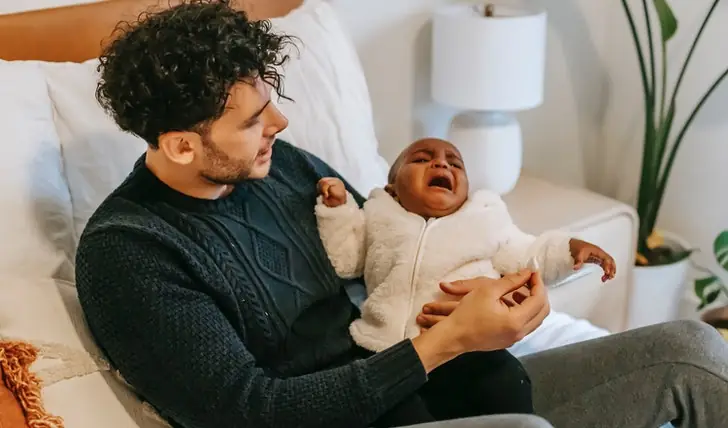
Later in 2017, the debate heated up when the host of the TV show Out Daughtered, Adam Busby, spoke up about his struggle with postpartum depression. The host was widely criticized and ‘ridiculed’ by women and was schooled by moms. Some passed comments like “man up, Adam” inferring that postpartum depression is not a manly disease.
A report suggests that fathers are 10% more likely to experience the symptoms of postpartum depression than unmarried males. However, what ignites the symptoms is still unknown. On the other hand, the symptoms of postpartum depression in moms are obvious. It is associated with the hormonal shift of women during the birth process. Thus, the symptoms of postpartum depression are more apparent in moms compared to dads. Perhaps this is the reason that women wrongly associate it with moms only.

Perhaps the Testosterone Hormone Levels in Dads are to be Blamed
With all the debates going on today, deciding whether postpartum depression can be found in dads or it is just a ‘mom thing’ has become a quagmire. To solve this issue, a few psychologists at Harvard University have conducted a research study.

The research anticipated, through experimenting with 20 fathers, that perhaps the level of a hormone called testosterone is responsible for postpartum depression in men. Furthermore, the research reveals that the testosterone level of the dad can also cause postpartum depression in the mom as well. In other words, postpartum depression originates in fathers, who in turn can transfer it to their partners.
Testosterones are hormones that are responsible for the maintenance of muscles, and special organs of men, and help in developing ‘manhood’ like growing hair, etc. However, the hormone level goes up and down constantly. During the first birth, it lowers and may create risks of postpartum depression. Needless to say, science has also proved that this is equally true in the animal kingdom as well.